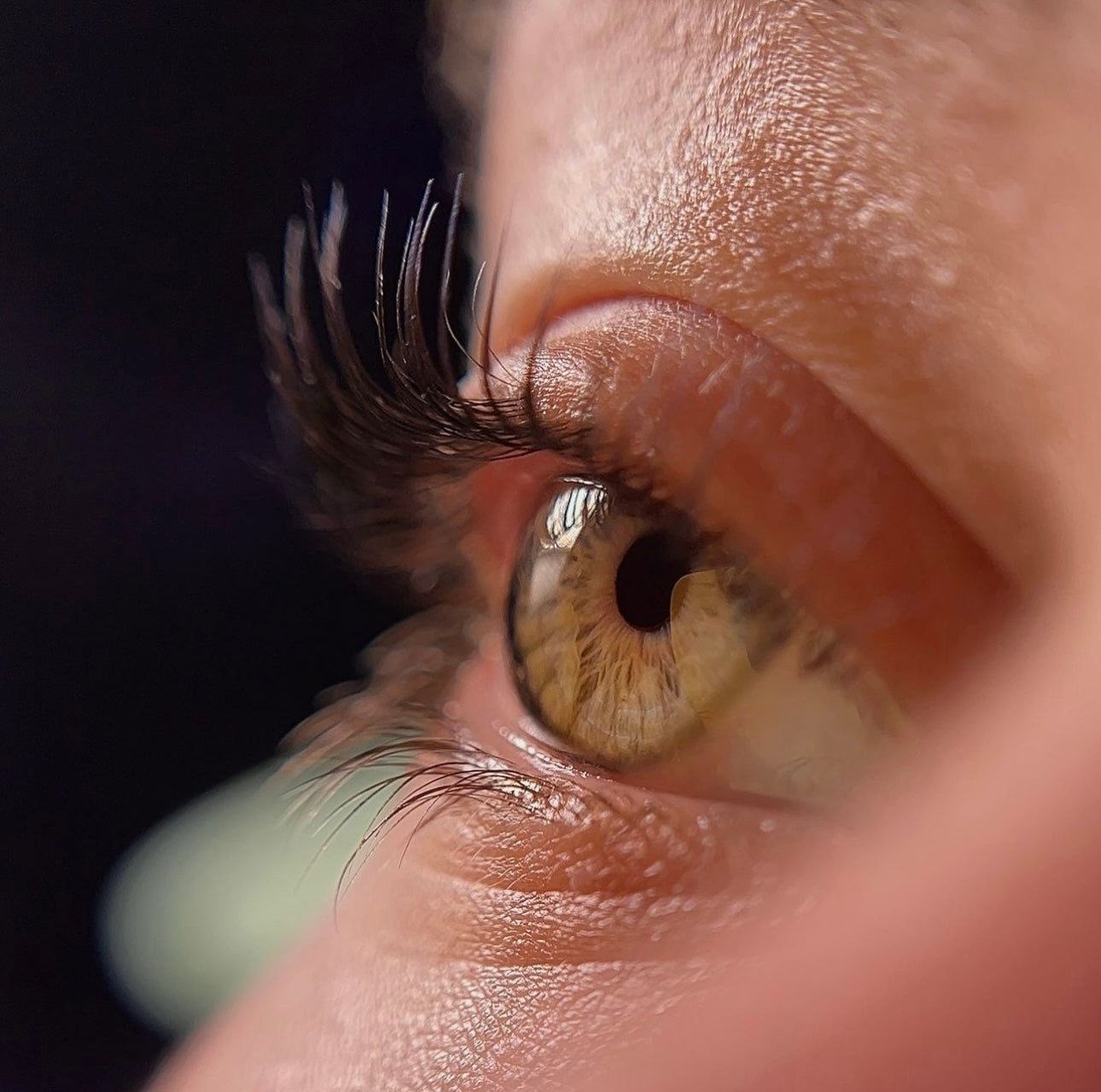



There's no federal minimum age for eyelash extensions in the U.S. Most professional salons, including Belris, set their own policy: 16+ is standard, some accept clients as young as 14 with a guardian present, and anyone under 18 needs signed parental consent.
Below, we cover the real risks, what age is right for which lash treatment, and how to do it safely if you decide to go ahead.
Quick Answer by Treatment Type
| Treatment | Typical Minimum Age | Parental Consent Needed? |
|---|---|---|
| Eyelash Extensions | 14–16+ (varies by salon) | Yes, under 18 |
| Lash Lift (a "perm" for natural lashes) | 16+ | Yes, under 18 |
| Lash Serum (like Belris Lash & Brow Growth Serum) | No age restriction — it's a conditioning product, not a procedure | Recommended for minors |
| False/Strip Lashes ("fake eyelashes") | No age restriction — not a professional treatment | No |
Eyelash Extensions for Teens
As a teen, you've probably seen amazing lashes everywhere, on social media, on friends, maybe at a big event. For parents, and for us as professionals here at Belris in Los Angeles, the real question is about safety and maturity, not just style.
What Experts & Salons Say About Minimum Age
There is no federal law requiring a minimum age for lash extensions. Most professional salons, including Belris, set their own policy for safety and liability reasons. Some businesses accept clients as young as 14 with a guardian present; professional standards typically suggest waiting until 16 or older.
Our policy at Belris: anyone under 18 needs parental consent.
The Parental Consent Requirement
- Legal requirement — a minor cannot legally sign a service or waiver form; a parent must sign off understanding the process and aftercare.
- Safety partnership — this holds both teen and parent responsible for proper aftercare once the teen is home.
- Maturity check — extensions require daily hygienic cleansing, sleeping clean, and not picking or pulling. Parental consent is effectively a check on responsibility, not just a formality.
Are Eyelash Extensions Safe for Teens? The Real Risks
Badly done extensions can cause real damage, and teen skin and newly grown lashes can be especially delicate.
- Allergies and eye reactions — the adhesive (cyanoacrylate) can cause itching, swelling, or redness even when labeled "hypoallergenic." A patch test before application is non-negotiable.
- Infections from poor hygiene — double-dipped adhesive or unclean tools can cause styes or conjunctivitis. Ask your salon how they clean between clients.
- Damage to natural lashes — extensions that are too thick, heavy, or long put tension on natural lashes, causing breakage or loss over time — worse if the wearer picks or pulls at them.
When Extensions Might Be Okay for Teens
- Special occasions — prom, a school dance, or graduation, where the low-maintenance look is worth it short-term.
- Proven responsibility — teens who already keep up good skin care and hygiene habits are better candidates.
Best Style for a Teen's First Set Start with a Classic set (one extension per natural lash) — the most natural look with minimal weight. Avoid Volume or Mega Volume sets on a first set; they're too heavy for fine, young natural lashes and harder to keep clean.
Learn more about Eyelash Extensions in Los Angeles at Belris →
Lash Lift for Teens (Often Confused With "Eyelash Perm")
A lash lift — sometimes searched as an "eyelash perm" — is a different treatment from extensions. It uses a chemical solution to curl and set your own natural lashes upward, rather than adding synthetic lash fibers. No glue, no added length — just a lifted, curled look that lasts several weeks.
Minimum age: Most technicians, including Belris, require clients to be at least 16, with parental consent required for anyone under 18.
Lash lift risks for teens:
- The chemical solution can irritate sensitive or reactive skin, so a patch test matters here too.
- Over-processing (leaving the solution on too long, or repeating too frequently) can leave natural lashes dry or brittle.
- Because there's no added length or volume, the risk of natural-lash damage is lower overall than with extensions — often a good lower-risk starting point for a teen's first lash treatment.
If you want fuller-looking lashes without any glue or chemical risk to weigh, a lash lift paired with our Brow Lamination is a popular lower-commitment combo for teens preparing for an event.
Lash Serum: The Lowest-Risk Option for Teens
If the cost or commitment of extensions feels like too much, or a parent remains unsure, a growth serum is a low-commitment alternative. Our Belris Lash & Brow Growth Serum conditions and lengthens natural lashes over time — no adhesive, no chemical processing, no risk of tension damage. It's a favorite with both teens and parents who want the look without the procedure.
Is lash serum safe for teens?
Yes, as a topical conditioning product rather than a chemical or adhesive-based procedure, most serums (including ours) carry no age restriction, though we still recommend patch-testing any new product and checking ingredients if your teen has known sensitivities.
Are Fake (False Strip) Eyelashes Different?
Worth calling out separately: many parents and teens searching about "fake eyelashes" actually mean drugstore strip or cluster lashes — a totally different product from professional lash extensions. These are temporary, applied and removed daily with basic lash glue, and don't involve a technician or a salon visit at all.
- No age restriction — strip lashes are a cosmetic product, not a professional service.
- Lower risk overall, since nothing stays on for weeks and there's no ongoing tension on natural lashes — but drugstore lash glue can still cause irritation, so a patch test is still smart before a first use.
- If your teen is asking about "fake eyelashes" for a one-off event, strip lashes may be the simplest, lowest-commitment option — professional extensions or a lash lift make more sense for something longer-lasting.
Responsible Guidelines for Teens and Parents
Whichever treatment you choose, these rules apply:
- Aftercare is non-negotiable. Daily washing with an oil-free cleanser; oil-based makeup and removers destabilize adhesive and shorten how long a treatment lasts.
- No picking or pulling. Let extensions shed naturally or have them professionally removed — pulling takes your natural lash with it.
- Verify your salon's credentials. Confirm the salon is certified, the technician is licensed, and hygiene standards are visibly high. Don't choose on price alone — that's where safety risks creep in.
Frequently Asked Questions
How old do you have to be to get eyelash extensions?
There's no legal minimum age in the U.S. Most professional salons, including Belris, set 16 as a standard minimum, with some accepting clients as young as 14 with a guardian present. Anyone under 18 needs signed parental consent.
Can a 13 year old wear fake eyelashes?
Yes — drugstore strip or cluster lashes have no age restriction since they're a cosmetic product, not a professional treatment. Professional lash extensions are a separate service with salon-specific age policies.
How old do you have to be to get a lash lift?
Most salons, including Belris, require clients to be at least 16, with parental consent required under 18 — the same general policy as eyelash extensions.
What are the eyelash perm (lash lift) risks for teenagers?
The main risks are skin/chemical sensitivity (a patch test is essential) and over-processing from leaving the solution on too long. Because no synthetic lashes or glue are added, the risk to natural lashes is generally lower than with extensions.
Is lash serum safe for teens?
Generally yes — growth serums are topical conditioning products, not procedures, so most (including Belris Lash & Brow Growth Serum) carry no age restriction. Patch-test first if your teen has sensitive skin.
What's the difference between eyelash extensions and a lash lift for a teenager?
Extensions add synthetic lash fibers for length and volume and carry more risk to natural lashes if overdone. A lash lift curls and sets a teen's own natural lashes with no added length — generally the lower-risk starting option.